Lychee: Origins - Consumption - Nutrition Facts - Health Benefits
|
|
|
Contents
- Geographic origin and regions grown
- Common consumption today
- Nutrition Facts: Vitamins, minerals and phytochemical components
- Health Benefits: Medicinal uses based on scientific studies
- Bibliography
Geographic Origins and Regions Grown
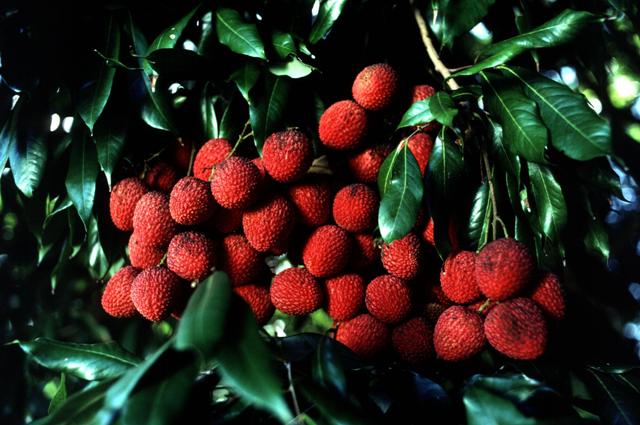
The lychee is unique in that it is the only plant in the genus Litchi of the soapberry family. A native of south China, the lychee is also found in south Vietnam, parts of Indonesia and in the eastern Philippines.
The lychee has an outer layer that contains a rough texture and a rind that is pinkish to reddish hue that can be easily removed to get to the inside layer which is edible. The white flesh inside, translucent and sweet, is reminiscent of the flesh of a grape. The brown seed that is shaped like a nut should be thrown out because it can be poisonous.
Common Consumption Today
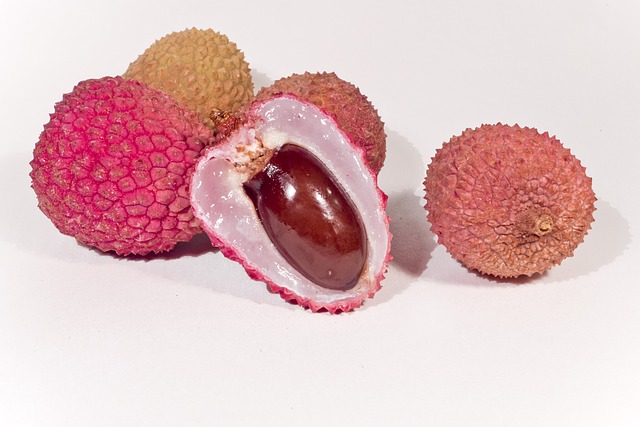
Lychees are usually freshly relished, straight out of the hand. They are normally pitted and peeled, which can be combined with other fruits in fruit salads and fruit cups. Lychees are served stuffed in numerous, delicious combos such as:
1) cottage cheese topped with dressing and pecans,
2) with a combination of mayonnaise and cream cheese or
3) with pecans decorated with whipped-cream.
Lychees that are sliced, and then frozen in gelatin (lime), can be presented on top of lettuce with mayonnaise or whip-cream. As a desert, lychees can be placed into layers with ice-cream (pistachio) and used in parfaits with whipped cream.
Lychees that have been sliced into halves can be used with the cooking of a ham by placing the halves on the ham the last 45-60 minutes of baking. Lychees that are pureed can be an addition to an ice cream mix. By removing the juice from a seeded lychee, and mixing it with warm milk, sugar, light cream, lemon juice, and plain gelatin you can create sherbet. Sun or fire dried lychees are known as lychee-nuts and taste a bit like a raisin.
If ever you have an opportunity to dine in a Vietnamese restaurant, lychees are probably on the drink and dessert menu and this is a wonderful way to experiment with the fruit.
Nutrition Facts: Vitamins, Minerals and Phytochemical Components
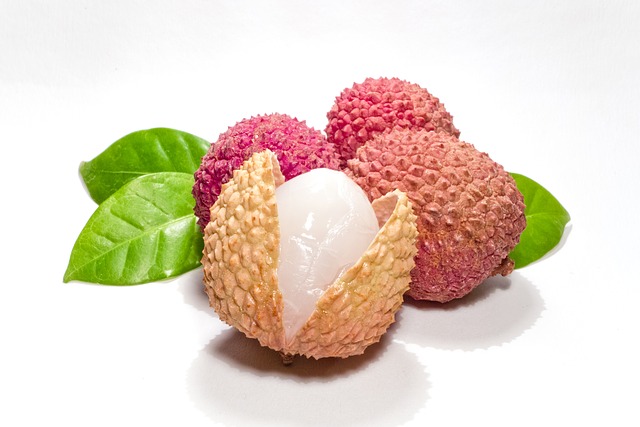
Lychees can be a great source for essential vitamins and contains 72 mg of vitamin C. Studies show that it only takes three lychees to meet one-third of an adult’s daily requirement of vitamin C. Lychees can also contain a great amount of copper, potassium and riboflavin.
Full details of the nutrients they contain can be found by clicking the link below...
Health Benefits: Medicinal Uses Based on Scientific Studies
When consumed in moderation, lychees are known to alleviate coughing, and benefit in the aiding of tumors, gastralgia and glands that are enlarged (1).
Bibliography
1. Zhao, M., Yang, B., Wang, J., Li, B., & Jiang, Y. (2006). Identification of the major flavonoids from pericarp tissues of lychee fruit in relation to their antioxidant activities. Food Chemistry, 98( 3), 539-544.
Disclaimer
Nutritiousfruit.com provides this website as a service. Although the information contained within the website is periodically updated, no guarantee is given that the information provided is correct, complete, and/or up-to-date. The materials contained on this website are provided for general information purposes only and do not constitute legal or other professional advice on any subject matter. Nutrtiousfruit.com does not accept any responsibility for any loss, which may arise from reliance on information contained on this website. The information and references in this website are intended solely for the general information for the reader. The content of this website are not intended to offer personal medical advice, diagnose health problems or to be used for treatment purposes. It is not a substitute for medical care provided by a licensed and qualified health professional. Please consult your health care provider for any advice on medications.
Didn't find what you were looking for? Search here...

Amazon Search Box:
Did you like this page?
|
|
|

Hi, Phillip here, thanks for visiting my page. I am the publisher of NutritiousFruit.com
where my primary goal is to provide information about fruit and their nutritional benefits to readers based on research from online sources. Read more...


 On Sale: Nutritious Fruit Snack Recipes