Clementines: Origins - Consumption - Nutrition Facts - Health Benefits
|
|
|
Contents
- Geographic origin and regions grown
- History of consumption
- Common consumption today
- Nutrition Facts: Vitamins, minerals and phytochemical components
- Health Benefits: Medicinal uses based on scientific studies
- Bibliography
Geographic Origins and Regions Grown
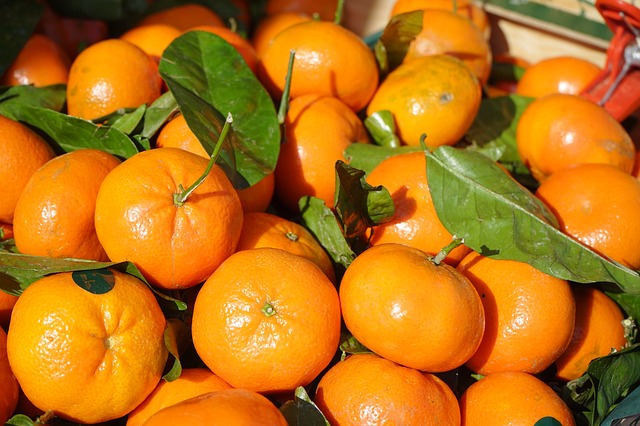
As with all fruit, "Clementine" can also refer to the tree. Clementines (Citrus reticulate) are usually produced in Spain and Morocco, and for many years have been grown throughout Europe. Recently, the United States created a market for Clementines.
In 1997, Florida experienced a brutal winter that caused the price of oranges to rise because the supply ran short. During this time, clementines from California were readily available and became popular because of the shortages in Florida. These types of clementines are also referred to as Christmas Oranges.
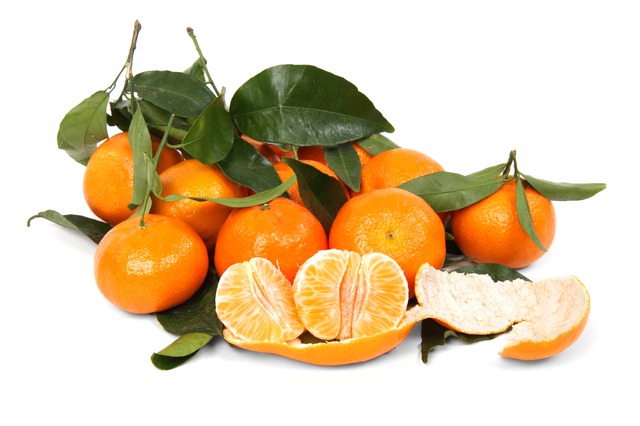
They are a type of mandarin-like, colorful orange. They are ripe and taste best when the skin is loose. It is a medium sized fruit with an outside that is separated into 8-14 segments that can very easily be peeled. It has an advantage over the orange in its ease in peeling. Clementines are very similar to oranges in composition and posses essentially the same nutrients and benefits as that of an orange.
When they are cross-pollinated with fruits other than clementines, they are known to lose the appeal of being seedless. In California, there was even a court case involving a fruit producer and a beekeeper where the fruit producer wanted to sue the beekeeper for not being able to keep the bees away from the fruit. :)
History of Consumption
The history of the clementine comes from the story of Father Clement Rodier who accidently discovered the fruit in his orphanage’s garden. Others claim that the fruit originated in China a long time ago. Many people say that it shares many similarities to other fruits such as the Canton-Mandarin. In Arabian areas Clementine is referred to as Kalamintina.
Clementines weren’t always separated from other types of mandarins, however. In Japan, the clementine is called mikan and in Germany it is simply called mandarine. In some instances, clementines are associated with the tangerine from Algeria. In 1914, California first developed this type of mandarin for commercial agriculture even though it was grown in research centers in California during the early 1900’s.
Common Consumption Today
Clementines are available from mid November through January and are most often eaten raw. They are pegged and put into fresh fruit salads, cereals, and yogurt, or packaged individually in small cups. The fruit also used to make pies, jellies, preserves, and other desserts. In addition, they are also used to make vinaigrettes and sauces for meat dishes.
Nutrition Facts: Vitamins, Minerals and Phytochemical Components
Clementines contain vitamins A and C as well as essential sugars, calcium, folic acid, and potassium (3). It is also a good source of dietary fiber (6). They help the body retain water and cleanse the body by stimulating detoxification.
The vitamins and minerals in clementines also treat nervous tension, insomnia, and restlessness. Full details can be found by clicking the link below...
Health Benefits: Medicinal Uses Based on Scientific Studies
One serving of clementine supplies a full day's supply of vitamin C (6). Unfortunately, only about one-half of adults consume the recommended amount of vitamin C daily. Vitamin C is an antioxidant that has many functions such as the promotion of healthy skin and gums. When vitamin C is consumed at the same time as an iron source that is not necessarily meat, the vitamin C has the ability to increase iron absorption into the body (1).
Clementines are a good source of folate which helps strengthen healthy red blood cells (5). Folate has many health benefits including the reduction of neural tube birth defects during pregnancy (2). Folate also helps produce and maintain new somatic cells. This is especially important during periods of rapid cell division and growth such as during infancy and pregnancy.
Folate is needed by the body to make DNA and RNA, which are the building blocks of cells (5). It also helps prevent changes to DNA that may lead to cancer (5). Both adults and children need folate to make normal red blood cells and prevent anemia (5). Folate is also essential for the metabolism of homocysteine and helps maintain normal levels of this amino acid (5).
The fruits contain about as much potassium as a banana. They are also low in sodium so a diet that includes clementines may reduce the risk of high blood pressure (4) and stroke (5).
Bibliography
1. Akhilender-Naidu K. (2003) Vitamin C in human health and disease is still a mystery? An overview. Nutrition Journal, 2:7.
2. Christensen B, Rosenblatt DS. (1995) Effect of folate deficiency on embryonic development. Baillieres Clinical Haematology, 8(3):617-37.
3. FactsAboutFruit.com. (2007) Clementine. Retrieved on October 23, 2007 from http://www.factsaboutfruit.com/Clementine.html
4. Harvard Medical School Health Guide. (2007) Potassium lowers Blood Pressure. Retrieved December 8, 2007 from http://www.health.harvard.edu/fhg/updates/update0705c.shtml
5. National Institute of Health, Office of Dietary Supplements. (2007) Dietary Supplement Fact Sheet: Folate. Retrieved December 8, 2007 from
http://dietary-supplements.info.nih.gov/factsheets/folate.asp
6. Palumbo, C. (2007) The wonders of winter. Retrieved on October 23, 2007 from http://www.foodfit.com/healthy/archive/healthyNutriSmarts_nov21.asp
Disclaimer
Nutritiousfruit.com provides this website as a service. Although the information contained within the website is periodically updated, no guarantee is given that the information provided is correct, complete, and/or up-to-date. The materials contained on this website are provided for general information purposes only and do not constitute legal or other professional advice on any subject matter. Nutrtiousfruit.com does not accept any responsibility for any loss, which may arise from reliance on information contained on this website. The information and references in this website are intended solely for the general information for the reader. The content of this website are not intended to offer personal medical advice, diagnose health problems or to be used for treatment purposes. It is not a substitute for medical care provided by a licensed and qualified health professional. Please consult your health care provider for any advice on medications.
Didn't find what you were looking for? Search here...

Amazon Search Box:
Did you like this page?
|
|
|

Hi, Phillip here, thanks for visiting my page. I am the publisher of NutritiousFruit.com
where my primary goal is to provide information about fruit and their nutritional benefits to readers based on research from online sources. Read more...


 On Sale: Nutritious Fruit Snack Recipes