Kiwi Fruit: Origins - Consumption - Nutrition Facts - Health Benefits
|
|
|
Contents
- Geographic origin and regions grown
- Common consumption today
- Nutrition Facts: Vitamins, minerals and phytochemical components
- Health Benefits: Medicinal uses based on scientific studies
- Bibliography
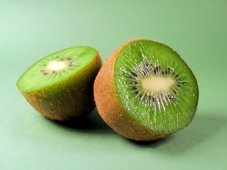
Kiwi fruit can and should be eaten whole. The skin increases tartness and offers additional vitamins, minerals and fiber. If you desire something less tart; cut the kiwi in half and eat as you would a passion fruit scooping out the flesh; or peel and slice it like a pineapple.
Geographic Origins and Regions Grown
 |
 |
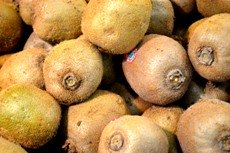
Do I even need to tell you about kiwi? You know kiwi! Maybe you haven’t purchased it yourself, but you’ve seen it in fruit salads, at social gatherings, or on TV. It originated in southern China, however, and due to its likeness to New Zealand’s kiwi bird it was named kiwifruit.
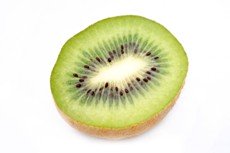
The average kiwi fruit is about the size of a large hen's egg. It has fibrous brown skin with green flesh that contains small, black, edible seeds. Kiwi is soft and flavorful.
Common Consumption Today
Kiwi fruit is one of the more commonly consumed exotic fruits in American supermarkets today. It is often times eaten whole with the skin intact, increasing the level of tartness. This particular unique fruit, when eaten with the skin, offers an abundance of vitamins, minerals, and fiber.
Although the most common way of consuming a kiwi fruit is with the skin intact, you can always try to take its thin and delicate exterior off the surface by using a potato peeler, motioning up from the base of the fruit towards the harder end up top where it was once attached to the branch on which it grew. When cutting slices to be served in a variety of dishes, make sure to do so against the grain, providing you with a clean, smooth cut.
Nutrition Facts: Vitamins, Minerals and Phytochemical Components
Talk about a fruit packing a punch in taste and vitamins. Kiwi fruit is a rich source of vitamin C and is high in potassium. By comparison it’s content is less than a banana’s, but you’d eat more anyway. It also contains vitamins A and E. The skin is a good source of flavonoid antioxidants as well. Didn’t I say to eat the skin?
The kiwi fruit seed oil contains on average 62% alpha-linolenic acid, an omega-3 fatty acid. More than 90% of the fruit is made up of water, so it only has 90 calories per serving. A 5-oz. serving of kiwifruit averages over 450 mg of potassium, beating out the banana and the orange.
It also has about 230% of the RDA for vitamin C and has approximately 10% of the RDA for folic acid and vitamin E.
Medicinal Uses Based on Scientific Studies
 |
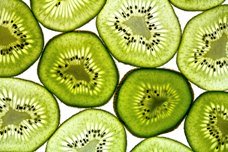 |
The kiwi fruit has also been reported in some cultures to have been used for slight cases of diarrheic illnesses, being induced as a mild laxative. It is chock full of fiber, since the large amount of little black seeds found in the kiwifruit make for a great method of aiding digestion (hence the use as a mild laxative). The way in which this is accomplished, is by providing a natural fruity way of feeling a better sense of fullness.
When a kiwifruit is found in its raw state, high contents of actinidin (an enzyme that dissolves protein) can be found. This compound is often found in commercial production as a means of tenderizing meat. This same substance can cause allergic reactions for some people, and also an allergen inducer for others.
In that same sense, those individuals who find themselves allergic to pineapples, latex, or other similar substances within that category should be aware that they are most likely allergic to the common kiwifruit as well.
Common allergic reactions to kiwifruit involve tingling and a sore mouth, puffing up of the face, tongue and lips; rashes, abdominal pain, vomiting, and in the some critical cases, difficulties of breathing, such as wheezing.
As most of these symptoms are more commonly found in children, it is quite possible that they will be outgrown later in life. Regular checkups should be made to the doctor on an annual basis to see if your body has grown into the ability of consuming this fruit, with the addition of developing a tolerance to similar substances.
Aside from containing large amounts of allergens, vitamins, proteins and fibers, the kiwifruit holds a mild level of lutein, also known as a phytochemical. This chemical has been tested in scientific experiments in search of links with the prostrate and lung cancer prevention.
In addition, this exotic yet common fruit holds an abundance of carotenoids (beta carotene, lutein, and xanthophylls), phenolic compounds, and antioxidants including, but not limited to, vitamins C and E. Another way of improving the strength and durability of blood vessels, which helps to decrease inflammation in the veins, is through flavonoids – also found in kiwi fruits.
Another substance that is found in kiwifruits is called inositol, a natural sugar type alcohol. Recent scientific studies have shown that the function of inositol serves as a precursor for certain brain neurotransmitters of relatively high importance. This translates into the benefit of serving as a method of improving the conduction of nerves within the field of diabetic neuropathy.
Also within the field of neurobiology, the kiwi fruit contains a high content of serotonin, having a calming effect on most individuals with a particular lack of serotonin producers, serving as a dual agent in helping to calm anxiety or depression.
Another reason that the high content of vitamin C in the kiwifruit is so important has to do with the natural reasons behind the benefits of vitamin C itself. Vitamin C is known to be beneficial towards the gums and their rejuvenation, and healing for wounds.
The high content of magnesium found in the kiwifruit nears the sixth percentile range of the daily value for healthy intake, making it a well balanced snack. The levels of magnesium in the body are particularly important to watch with regards to preventing heart disease, myocardial infarction, and hypertension.
The kiwifruit is also the proud container via scientific tests of a wide range of electrolytes. These microscopic minerals are a necessity for replenishing energy after exercise during any time of the day. Get up and go with kiwi fruit!
 |
 |
Bibliography
- Rush CE, Patel M, Plank DL, Phil D, Ferguson RL. (2002) Kiwifruit promotes laxation in the elderly. Asia Pacific Journal of Clinical Nutrition. 11(2):164–168.
- USDA Agricultural Marketing Service. (1992) How to buy fresh fruits. United States department of Agriculture. No.572.
- Deters AM, Schröder KR, Hensel A. (2005). Kiwifruit (Actinidia chinensis L.) polysaccharides exert stimulating effects on cell proliferation via enhanced growth factor receptors, energy production, and collagen synthesis of human keratinocytes, fibroblasts, and skin equivalents. Journal of Cellular Physiology. 202(3):717-22.
- Morton, JF. (1987) Fruits of Warm climates. Creative Resource Systems, Inc. 293-299.
- Ortho Books. (1985) All about Citrus and Subtropical Fruits. Chevron Chemical Co. 51-55.
- Reich, Lee. (1991.) Uncommon Fruits Worthy of Attention. Addison-Wesley. 121-138.
Disclaimer
Nutritiousfruit.com provides this website as a service. Although the information contained within the website is periodically updated, no guarantee is given that the information provided is correct, complete, and/or up-to-date. The materials contained on this website are provided for general information purposes only and do not constitute legal or other professional advice on any subject matter. Nutrtiousfruit.com does not accept any responsibility for any loss, which may arise from reliance on information contained on this website. The information and references in this website are intended solely for the general information for the reader. The content of this website are not intended to offer personal medical advice, diagnose health problems or to be used for treatment purposes. It is not a substitute for medical care provided by a licensed and qualified health professional. Please consult your health care provider for any advice on medications.
Didn't find what you were looking for? Search here...

Amazon Search Box:
Did you like this page?
|
|
|

Hi, Phillip here, thanks for visiting my page. I am the publisher of NutritiousFruit.com
where my primary goal is to provide information about fruit and their nutritional benefits to readers based on research from online sources. Read more...


 On Sale: Nutritious Fruit Snack Recipes