Blackberries: Origins - Consumption - Nutrition Facts - Health Benefits
|
|
|
Contents
- Geographic origin and regions grown
- History of consumption
- Common consumption today
- Nutrition Facts: Vitamins, minerals and phytochemical components
- Health Benefits: Medicinal uses based on scientific studies
- Bibliography
Geographic Origins and Regions Grown
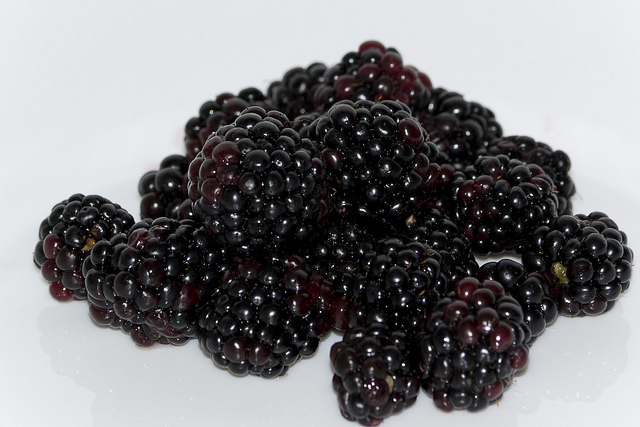
The blackberry (also known as bramble or occasionally "bramble raspberry") is well known worldwide. There are numerous subtypes of blackberries and the majority are found in the cooler or temperate climates of the Northern hemisphere. Blackberries are mostly found in North America and Canada. Other places where the berry can be located include Great Britain, New Zealand, Chile, and most of the European and Mediterranean countries.
History of Consumption
According to botanists, the blackberry is not an actual berry, but is instead an aggregate fruit that has numerous drupelets that ripen into black or dark purple fruits. Blackberries have been consumed for centuries by humans, mainly by North Americans and Europeans (2). However, recent statistics indicate that the quest for the fruit appears to be increasing worldwide.
The fruit is often combined with salads and fruit desserts. However, in places like Chile, New Zealand, and some parts of North America certain species of the blackberry, particularly Rubus armeniacus and Rubus laciniatus, are considered to be a major weed problem that hampers agriculture (7).
Common Consumption Today
The blackberry is a soft and tender fruit that is typically used to make desserts, jams, jellies, and even wines. The fruit is also popular with bees because it produces sweet nectar that makes a medium to dark, fruity honey.
There are wild blackberries growing throughout North America, but it is not recommended that one collect or consume them. The reason for this is that these blackberries are often contaminated by road side oil spills or other toxins from the traffic as well as large amounts of pesticides and insecticides (5).
Nutrition Facts: Vitamins, Minerals and Phytochemical Components
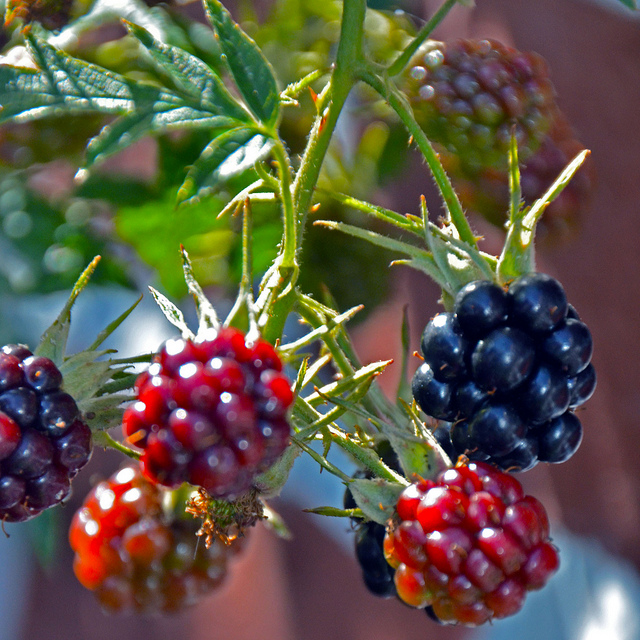
Blackberries contain several polyphenol antioxidants like tannins (gallic acid) and phenylpropanoids (lignins and flavonoids). These antioxidants are known to protect the human body against a variety of oxidizing agents that can cause neurodegenerative diseases and cardiovascular diseases (1). Other flavonoids in the blackberry are well known as regulators of enzymes that rid the body of toxins. A table of nutrients can be found on the following link...
Health Benefits: Medicinal Uses Based on Scientific Studies
The blackberry root is often used an astringent to treat severe diarrhea and dysentery, which is a severe form of diarrhea that presents blood in the stool, severe cramping, and tenesmus (painful straining) (6). Some researchers claim that the juice extracts of the fruit can be used an herbal medicine to protection the skin from infections and reduce premature aging of the skin (4).
Other studies performed on several herbal teas, including shrubby blackberry tea, concluded that their phenolic compounds and antioxidants are a beneficial addition to the diet of type 2 diabetics. The antioxidants prevent the development of vascular diseases that often occur in type 2 diabetic patients (3).
Bibliography
1. Araya H, Clavijo C, Herrera C. (2006) Antioxidant capacity of fruits and vegetables cultivated in Chile. Archivos Latinoamericanos de Nutricion, 56(4):361-5.
2. Blamey M, Grey-Wilson, C. (1989) The Illustrated Flora of Britain and Northern Europe. Hodder and Stoughton.
3. Bueyuekbalci A, El SN, (2008) Determination of in vitro antidiabetic effects, antioxidant activities and phenol contents of some herbal teas. Plant Foods for Human Nutrition. 2008 Jan 9.
4. Dai J, Patel JD, Mumper RJ. (2007) Characterization of blackberry extract and its antiproliferative and anti-inflammatory properties. Journal of Medicinal Food, 10(2):258-65.
5. Food Standards Agency. Eat well, be well: Foraging for flavor. United Kingdom Retrieved January 22, 2008 from http://www.eatwell.gov.uk/healthydiet/seasonsandcelebrations/autumn/hedgerowharvest/
6. Grieve, M. (1971) A Modern Herbal: The medicinal, culinary, cosmetic and economic properties, cultivation and folklore of herbs, grasses, fungi, shrubs, and trees with all their modern scientific uses. Dover Publications.
7. Huxley A, Griffiths M, Levy M. (1992) New RHS Dictionary of Gardening. Macmillan Press.
Disclaimer
Nutritiousfruit.com provides this website as a service. Although the information contained within the website is periodically updated, no guarantee is given that the information provided is correct, complete, and/or up-to-date. The materials contained on this website are provided for general information purposes only and do not constitute legal or other professional advice on any subject matter. Nutrtiousfruit.com does not accept any responsibility for any loss, which may arise from reliance on information contained on this website. The information and references in this website are intended solely for the general information for the reader. The content of this website are not intended to offer personal medical advice, diagnose health problems or to be used for treatment purposes. It is not a substitute for medical care provided by a licensed and qualified health professional. Please consult your health care provider for any advice on medications.
Didn't find what you were looking for? Search here...

Amazon Search Box:
Did you like this page?
|
|
|
Hi, Phillip here, thanks for visiting my page. I am the publisher of NutritiousFruit.com
where my primary goal is to provide information about fruit and their nutritional benefits to readers based on research from online sources. Read more...

 On Sale: Nutritious Fruit Snack Recipes