Acai Berries: Origins - Consumption - Nutrition Facts - Health Benefits
|
|
|
Contents
- Geographic origin and regions grown
- History of consumption
- Common consumption today
- Nutrition Facts: Vitamins, minerals and phytochemical components
- Health Benefits: Medicinal uses based on scientific studies
- Bibliography
Acai berries have been at the forefront of extravagant claims of health benefits over recent years and consequently have suffered from something of a public backlash. Here I will bring you some background and insights without the hype.
Geographic Origins and Regions Grown
 |
 |
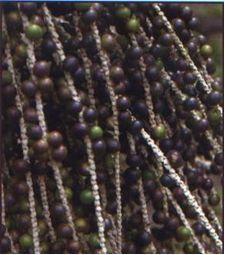
There are several species of Acai palm trees (genus Euterpe) which are native to tropical Central and South America. The species can be found from the North of Belize to all the way across the continent in the south of both Brazil and Peru.
The acai palm trees generally grow well under wet and swampy conditions. The Euterpe family of plants is known for their moderate height, thin stems, and attractive palms. The trees may reach a height of 45-60 feet and the palm leaves have an average width of 9 feet.
History of Consumption
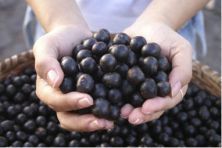
The Acai Palm is famous for its berries, which are dark purple and about the size of a large grape. The pulp has a similar consistency to that of a soft pear. Each year, two crops of fruits are produced and the number of fruit borne may vary on each tree but usually range anywhere from 600-1000.
The berry, which was initially more famous for the large amounts of juice contained within the pulp, has been consumed by South Americans for centuries. It was later discovered that the flesh of the fruit was just as delicious.
There is a large seed inside the berry and the color of the flesh may range from green to dark purple, depending on how ripe the berry is. The flesh is soft and pulpy like a mango, but unfortunately the seed makes up the large part of the fruit.
The berries of the Acai palm are usually consumed in a salad or the pulp is crushed as a means of obtaining the juice.
Common Consumption Today
In some parts of South America, acai berries also function as a major food source and make up more than 40-50% of each meal.
To add variety to the diet, the pulp is also squeezed and various flavored juices are made from the berry. The berry juice is also added to the local sodas, beverages, and soft drinks.
Frequently, the berries are served in rice puddings and the pudding is often served cold.
Once the fruit’s season comes to an end, the fruit is gathered and the pulp is either frozen or freeze dried. The food industry in South America now market acai berry juices, drinks, sorbets and sodas, often, combining the acai berry juice with other fruit juices.
The seeds are also used in the food industry and are not thrown away after the fleshy part of the berry has been eaten. The collected seeds are crushed and frequently used as livestock feed or combined with various fertilizers.
Many other countries have tried to grow the Acai plant, but so far all efforts have failed to nurture this plant outside of South America.
The Acai plant does not only have nutritional value but is often used in the material industry. The palm leaves are utilized to build mats, hats, carpets and for roof thatching.
Nutrition Facts: Vitamins, Minerals and Phytochemical Components
Acai fruits have been found to have numerous chemicals, some of which may have medicinal value. The polyphenols contained within the fruit have been found to have strong antioxidant properties (5).
The levels of anthocyanin, flavonols, and proanthocyanidins have also been found in large amounts in these berries and current research indicates that these chemicals may protect against the potent oxidants like peroxy and hydroxy radicals (3).
The latest research indicates that these antioxidants can penetrate human cells, help protect the body from harmful bacteria and help ward off upper respiratory tract infections.
Other work indicates that the seeds of the fruit also are potent antioxidants and may help prolong the shelf life of foods (5).
Health Benefits: Medicinal Uses Based on Scientific Studies
Acai berries are also reported to have some medicinal benefits. The native South Americans have used the fruit and the roots of the plant to treat numerous ailments including constipation, diarrhea, and nausea.
The juice has also been used to treat a variety of skin allergies and infections (4). Current research is being done to investigate the role of the berries in lowering blood cholesterol.
There is speculation that the freeze dried acai pulp may have anti-inflammatory properties and its actions are now being studied in laboratory tests. Other immunological properties of the pulp include stimulation of the macrophages to kill bacteria.
Other research being conducted on the acai berry includes its anticarcinogenic properties. There is some evidence that the fruit may have the ability to stop the rapid proliferation of certain cancer cells (2).
Because the acai berry has a deep purple color, it has been used as a natural food coloring agent. In addition, the dark pigment of the fruit is now being studied as a dye for use in magnetic resonance imaging (1).
Bibliography
- Cordova-Fraga T, de Araujo DB, Sanchez TA, Elias J Jr, Carneiro AA, Brandt-Oliveira R, Sosa M, & Baffa, O. (2004). Euterpe oleracea (Acai) as an alternative oral contrast agent in MRI of the gastrointestinal system: preliminary results. Magnetic Resonance Imaging, 22 (3): 389-93.
- Del Pozo-Insfran, D., Percival, S. S., & Talcott, S. T. (2006). Acai (Euterpe oleracea Mart.) polyphenolics in their glycoside and aglycone forms induce apoptosis of HL-60 leukemia cells. J. Agric. Food Chem. 54 (4): 1222-1229.
- Lichtenthaler, R., Rodrigues, R. B., Maia, J. G., Papagiannopoulos, M., Fabricius, H., & Marx, F. (2005). Total oxidant scavenging capacities of Euterpe oleracea Mart. (Acai) fruits. Internal Journal of Food Sciences and Nutrition, 56: 53-64.
- Plotkin, M. J. and Balick, M. J. (1984) Medicinal uses of South American palms. Journal of Ethnopharmacology, 10: 157-79.
- Schauss, A. G., (2006c). Acai (Euterpe oleracea): An Extraordinary Antioxidant-Rich Palm Fruit. Biosocial Publications.
Disclaimer
Nutritiousfruit.com provides this website as a service. Although the information contained within the website is periodically updated, no guarantee is given that the information provided is correct, complete, and/or up-to-date. The materials contained on this website are provided for general information purposes only and do not constitute legal or other professional advice on any subject matter. Nutrtiousfruit.com does not accept any responsibility for any loss, which may arise from reliance on information contained on this website. The information and references in this website are intended solely for the general information for the reader. The content of this website are not intended to offer personal medical advice, diagnose health problems or to be used for treatment purposes. It is not a substitute for medical care provided by a licensed and qualified health professional. Please consult your health care provider for any advice on medications.
Didn't find what you were looking for? Search here...

Amazon Search Box:
Did you like this page?
|
|
|

Hi, Phillip here, thanks for visiting my page. I am the publisher of NutritiousFruit.com
where my primary goal is to provide information about fruit and their nutritional benefits to readers based on research from online sources. Read more...


 On Sale: Nutritious Fruit Snack Recipes