Coconut: Origins - Consumption - Nutrition Facts - Health Benefits
|
|
|
Contents
- Geographic origin and regions grown
- Common consumption today
- Nutrition Facts: Vitamins, minerals and phytochemical components
- Health Benefits: Medicinal uses based on scientific studies
- Bibliography
Geographic Origins and Regions Grown
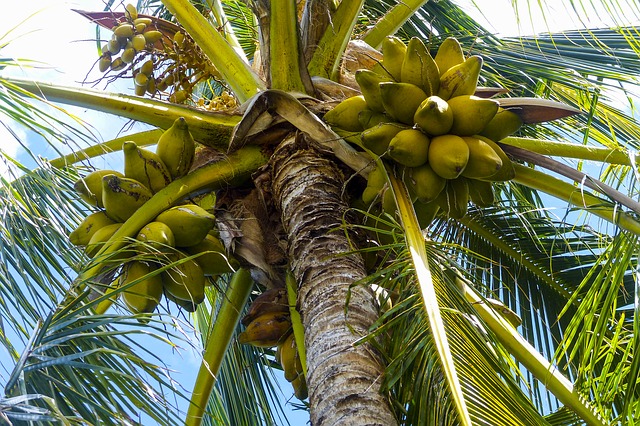
Cocos nucifera, or coconut as we know it due to the reference of “coco” by travelers of Spanish-decent meaning "monkey face," is in fact the world’s largest seed even though nucifera means “nut-bearing”. Because of the hairy shell and three indentations that look like eyes on its surface, explorers thought it bore much resemblance to the facial makeup of a monkey.
Native to Malaysia, Polynesia and southern Asia, the coconut palm is one of twelve plants that prevent starvation around the world. There is also a growing presence of coconut in South America, the Caribbean, India, the Pacific Islands, Hawaii, and Florida.
It has provided “jelly” or “meat”, milk, oil, and juice for generations of people worldwide. There are some islands that use coconuts as an everyday food and make up the bulk of their diet. Around thirty-three percent of the world’s population relies on coconuts to an extent for food and finance.
Common Consumption Today
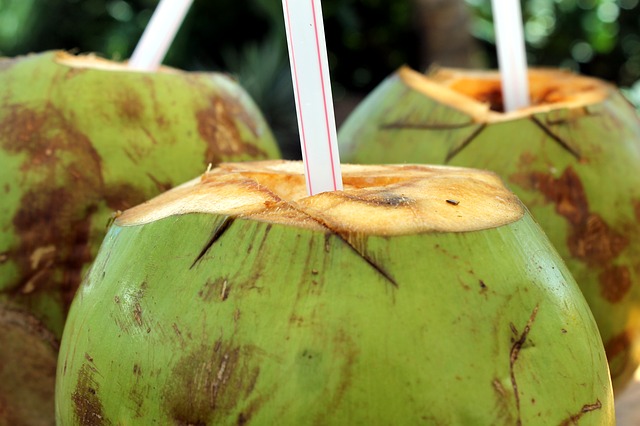
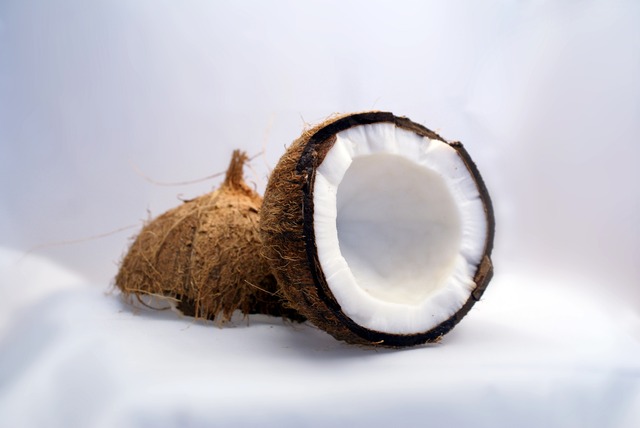
The fleshy part of the seed, the white part often referred to as the jelly or meat, is edible. This is the part that is used fresh and dried. The cavity contains coconut water. Mature fruits have significantly less liquid than young immature coconuts.
Coconut milk (not to be confused with the coconut water described above) is a process of grating the coconut flesh and combining with hot water or milk, which in turn extracts the oil and aromatic compounds. It has a fat content of approximately 17%. When refrigerated and left to set, coconut cream will rise to the top and separate from the milk.
This is a familiar substance in kitchens around the world, including Asia where it is a core ingredient in a number of flavorful dishes. It is tasty supplement for curries and desserts. My favorite would have to be Thai Coconut Soup with chicken and lime or lemongrass. Something about coconut milk is warming to the soul and the stomach.
Although coconut has so much to offer, you mostly use coconut in the dried form when baking and you will hardly notice its presence in processed foods. I should add that if you have the good fortune of living next to an Asian food market you must have a stroll down the candy isle. There are some tasty treats that include coconut on the shelves. In addition, coconut milk and water are easily found in your general supermarket if you plan on trying out a new recipe.
Nutrition Facts: Vitamins, Minerals and Phytochemical Components
The coconut is categorized as a food that is functional because it is highly nutritious fruit that is rich in fiber, vitamins, and minerals. The coconut supplies a plethora of benefits for well-being within its shell.
The oil extracted from the coconut is used in areas of the world that still rely on a more traditional approach to medicine. The palm of the coconut is valued very highly by some civilizations because it is used as a tool for medicine and a major supplier of food.
Only recently have scientists begun to discover the healing properties that coconut oil has to offer. Coconut water, containing sugar, fiber, proteins, antioxidants, vitamins, and minerals, provides an isotonic electrolyte balance and is used in sports drinks. In addition it is a highly nutritious food source. Barring spoilage, coconut water is sterile until opened, so it can be used as an intravenous fluid.
You can find the full coconut nutrition facts data by clicking the link below...
Health Benefits: Medicinal Uses Based on Scientific Studies
I’m sure you’re all familiar with the big news a while back of its supposed dangers, thus having it removed from movie theaters (movie popcorn has never been the same since). Of course the message of moderation was somehow lost in the story.
I can’t tell you how happy I am to share with you that although once mistakenly believed to be unhealthy because of its high saturated fat content, coconut oil is now known to be different from most other fats and is finally gaining recognition as a nutritious health food.
The major difference being that coconut oil is comprised of a healthier fatty acid and triglyceride content. These differences compared to the fats found in meat, milk, eggs, and other plants help lower the risk of atherosclerosis and heart disease and do not have a negative impact on cholesterol as once believed.
Other benefits of the coconut include killing viruses and bacteria that cause numerous maladies including SARS, influenza, hepatitis C, AIDS (3), just to name a few of the diseases. It also destroys yeast and fungi that are responsible for numerous afflictions and kills health-threatening parasites.
It is responsible for improving insulin secretion, relieving stress on systems in the body, such as the enzyme system and pancreas, reducing signs that show indication of pancreatitis, gallbladder disease, diabetes, and more.
The list is long and the benefits are plentiful. The coconut is important to the overall health of your internal organs. It will fight heart disease, cancer (4), and premature aging as well as promote weight loss
CLICK HERE to find out more about Coconut Oil & Belly Fat
Nutritionally, it is a source of energy and is beneficial in aiding the performance of athletes (2). It improves digestion and enhances the absorption of vitamins, minerals, amino acids, calcium and magnesium (5).
Antioxidants serve the purpose of helping the body to guard itself from free radicals that could potentially cause harm and show signs of aging prematurely (3) without depleting the body's antioxidants as the other oils might do. Coconut provides healthy looking hair and complexions and helps control dandruff.
External benefits abound. When applied topically it can protect one’s skin from the damaging effects of the sun (and you thought your lotion included coconut just so you could smell good).
Coconut oil forms a barrier of chemicals on the epidermis that wards off infection and supports the natural chemical balance of the skin. It also softens skin while relieving flaking and dryness. It prevent creases in the skin, and also from sagging, age spots, helps relieve psoriasis, eczema, and dermatitis (1).
Bibliography
1. Carpo, B. G., Verallo-Rowell, V. M., & Kabara, J. (2007). Novel antibacterial activity of monolaurin compared with conventional antibiotics against organisms from skin infections: an in vitro study. Journal of Drugs in Dermatology, 6(10), 991-998.
2. Ismail, I., Singh, R., & Sirisinghe, R. G. (2007). Rehydration with sodium-enriched coconut water after exercise-induced dehydration. Southeast Asian Journal of Tropical Medicine and Public Health, 38(4), 769-785.
3. Joardar, A. & Das, S. (2007). Effect of Fatty Acids Isolated from Edible Oils Like Mustard, Linseed or Coconut on Astrocytes Maturation. Cellular and Molecular Neurobiology, 75(5), 1962-1969.
4. Kehr, A. E. (1955). Tumor Induction on Nicotiana Species by Use of Coconut Milk and Yeast Extract. New Series, 121(3155). 869-870.
5. Priyadarshani, A. M. & Chandrika, U. G. (2007). Content and in-vitro accessibility of pro-vitamin A carotenoids from Sri Lankan cooked non-leafy vegetables and their estimated contribution to vitamin A requirement. International Journal of Food Sciences and Nutrition, 4, 1-8.
Disclaimer
Nutritiousfruit.com provides this website as a service. Although the information contained within the website is periodically updated, no guarantee is given that the information provided is correct, complete, and/or up-to-date. The materials contained on this website are provided for general information purposes only and do not constitute legal or other professional advice on any subject matter. Nutrtiousfruit.com does not accept any responsibility for any loss, which may arise from reliance on information contained on this website. The information and references in this website are intended solely for the general information for the reader. The content of this website are not intended to offer personal medical advice, diagnose health problems or to be used for treatment purposes. It is not a substitute for medical care provided by a licensed and qualified health professional. Please consult your health care provider for any advice on medications.
Didn't find what you were looking for? Search here...

Amazon Search Box:
Did you like this page?
|
|
|

Hi, Phillip here, thanks for visiting my page. I am the publisher of NutritiousFruit.com
where my primary goal is to provide information about fruit and their nutritional benefits to readers based on research from online sources. Read more...

 On Sale: Nutritious Fruit Snack Recipes