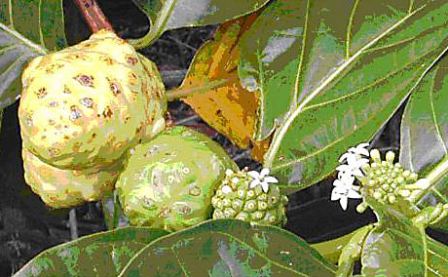
Noni Fruit
If you are thinking about planting a noni fruit tree you might want to take a rain check if you find certain odors offensive. The fruit is fondly referred to as cheese fruit and sometimes vomit fruit. Does that make you think twice? The reference to it as the starvation fruit essentially means that if you are starving and there is nothing to eat then eat noni. Only those suffering famine are likely to accept the strong smell and bitter taste. Noni juice was touted in the 1990s as an anticancer agent although most claims were based on undocumented reports. However it does appear that some properties are present in the fruit that may fight cancer and other diseases. Vitamins, Minerals and Phytochemical Components Noni provides carbohydrates, ascorbic acids, proteins, fructose, glucose, potassium, calcium, sodium, phosphorous, iron and magnesium, dietary fiber, and is low in fat. Noni fruit contains the following phytochemicals: oligo- and polysaccharides; glycosides (including flavonoids: rutin and asperulosidic); noniosides (this is the chemical to blame for its nasty smell); scopoletin (antibiotic activities); beta-sitosterol (possible anti-cholesterol activity); damnacanthal (potentially an inhibitor of HIV viral proteins); alkaloids (blame this one for the foul taste). It also contains essential alkaloids including proxeronine that initiates the release of xeronine in the intestine. This basically gets the nutrients into your cells thus improving your bodies ability to use the nutrients appropriately. Medicinal Uses Based on Scientific Studies Although research began sometime in the 1950s on the noni the reports are limited and research on the plant’s health benefits are only just beginning. Without any fancy scientific studies, all over the world the noni plant and fruit has been used to treat numerous maladies, from fever and respiratory problems to skin troubles. Various parts of the noni plant are used to contain fever, to treat eye problems, skin wounds and abscesses, gum and throat problems, respiratory ailments, constipation, to treat stomach pains and after child birth. Heated leaves applied to the chest relieve coughs, nausea, colic; juice of the leaves is taken for arthritis. The Noni fruit is taken for a number of things including lumbago, asthma and dysentery. Unripe fruit is pounded to mix with salt and applied to cuts and broken bones. Ripe fruit is used to draw out pus from an infected boil. The juices of over-ripe fruits are taken to regulate menstrual flow and ease urinary problems. The fruits are used to make a shampoo and to treat head lice. Other exotic diseases treated with the plant include diabetes and venereal diseases. Additional uses included are to fight fatigue and improve endurance (2). There have been recent applications also for the use of oil from noni seeds. Noni seed oil is abundant in linoleic acid that may have useful properties when applied topically on skin, e.g., anti-inflammation, acne reduction, moisture retention. Laboratory studies show that powdered noni fruit has mild anti-inflammatory effects. Analysis of noni fruit juice indicates it may have some antibacterial and antiviral properties and may also be effective in killing the organism that causes malaria. Other studies are under way to research its effects on anxiety and its use as a sedative (1). Early phases of research for human cancer patients are underway to study how noni and similar species may fight cancer and other diseases. Preliminary studies show some ability to promote the immune system in damaged cell repair. In other studies it also seems to slow down growth of new blood vessels that are needed for cancer to grow and spread. It is possible that some species might be able to cause blood vessels to break down in existing tumors. Chemicals derived from the species could also make cancer treatment drugs more effective. References 1. Deng, S., West, B. J., Palu, A. K., Zhou, B. N., & Jensen, C. J. (2007). Noni as an anxiolytic and sedative: a mechanism involving its gamma-aminobutyric acidergic effects. Phytomedicine, 14(7-8), 517-522. 2. Ma, D. L., West, B. J., Su, C. X., Gao, J. H., Liu, T. Z., & Liu, Y. W. (2007). Evaluation of the ergogenic potential of noni juice. Phytotherapy Research, 21(11), 1100-1101.
Return from Noni Fruit to Exotic Fruit List

|