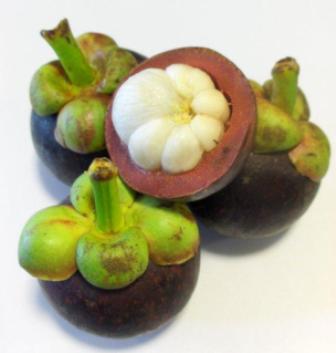
Mangosteen Fruit
The taste of mangosteen fruit is as unique to your taste buds as it is to your vision. For centuries, the varied cultures and societies of Southeast Asia have revered the fruit. In fact, the whole fruit, especially the xanthone-packed rind, has been utilized in folk medicine to treat a variety of health conditions. As a truly exotic fruit mangosteen is often touted as the "Queen of fruits". Vitamins, Minerals and Phytochemical Components The mangosteen fruit being rich in iron, fiber and carbohydrates; also contains the following phytochemicals: catechins, rosin, mangostin, normangostin, xanthones and gartanin. The super antioxidant here would be the xanthones. Xanthones are powerful antioxidants in a family of phytonutrients. To date, researchers have discovered and classified approximately 200 xanthones. Of these 200, 40 (the most useful 40) are found in the mangosteen fruit. The ORAC test is one of the most accurate ways to measure the ability of antioxidants in a certain substance to absorb free radicals. It shows that an ounce of mangosteen fruit juice has 20 to 30 times this ability than one ounce of most fruits and vegetables. The higher the ORAC score, the better the food is for the body. Medicinal Uses Based on Scientific Studies Special attention and high hopes are focused on the xanthones (1). They are capable of enhancing the immune system and helping the body fight free radicals. They may thus aid the postponing of the process of aging, promoting overall health, fighting off diseases and increasing resistance against viruses and bacteria. Due to this antioxidant activity, mangosteen may improve the state of the whole body, promoting vitality, longevity, and an increase in energy levels. Although xanthones are a set of chemical compounds that can be synthetically produced, they are more often found and more potent in their natural settings. This helps to explain why mangosteen is said to be so effective and promising in the treatment of multiple diseases. As a matter of fact, xanthones were first discovered when scientists began studying the health benefits of mangosteen based on its traditional indigenous medical uses. Various studies have shown that the important phytochemical xanthones have properties such as: anti-tumor (shrinks tumors), anti-leukemia (5), antifungal (critical for all cancer patients), antibacterial, antioxidants, antiproliferation (kills cancer cells) for some types of cancer (3). This is an impressive list of effects that all help reduce cancer! Taking into account the anti-cancer, anti-inflammatory, antimicrobial, and cholesterol-lowering (2) effects of the xanthones found in mangosteen, here is just a sampling of the many benefits that science has either researched or is in the process of discovering: antiviral, helps lower blood pressure, helps fight fatigue, antidepressant, prevents stomach ulcers, aids with weight loss, anti-aging, combats diarrhea, pain reducer, heart protective, analgesic, anti-Parkinsonian and anti-Alzheimer, lowers fevers, builds immunity to disease, anti-allergen, antifungal, antiparasitic (5). In general, mangosteen possesses anti-fungal, anti-bacterial and antioxidant properties. Although scientists note that more research is necessary to evaluate and discover all the powers of mangosteen, it is prized by many people all over the world. It is valued by those who claim to have already obtained visible positive results on their health. Indeed, even now some health practitioners are suggesting drinking mangosteen juice for relief to people who suffer from numerous ailments (4). References 1. Bumrungpert, A., Malaikacw, Y., Chaivisuthangkura, A., Suksamrarn, S., & Chitchumroonchokchai, C. (2007). Bioaccessibility and cellular uptake of xanthones from the pericarp of Garcinia mangostana (mangosteen) using simulated digestion and caco-2 human intestinal cells. FASEB Journal, 21(5), A730-A730. 2. Leontowicz, M., Leontowicz, H., Drzewiecki, J., Jastrzebski, Z., Haruenkit, R., Poovarodom, S., et al. (2007). Two exotic fruits positively affect rat’s plasma composition. Food Chemistry, 102(1), 192-200. 3. Moongkarndi, P., Kosem, N., Kaslungka, S., Luanratana, O., Pongpan, N., & Neungton, N. (2004). Antiproliferation, antioxidation and induction of apoptosis by Garcinia mangostana (mangosteen) on SKBR3 human breast cancer cell line. Journal of Ethnopharmacology, 90(1), 161. 4. Nature's Powerful Juices. Total Health, 28(2), 42-46. 5. Turner, L. (2006). Mangosteen: The magical fruit? Better Nutrition, 68(11), 18-19.
Return from Mangosteen Fruit to Exotic Fruit List

|